A One-Week Diagnostic Gap: Did Early Screening "Fail"?
In today's health-conscious world, regular check-ups have become a "must-do" for many to safeguard their lives. Ms. W, a 41-year-old woman, was no exception—she had diligently maintained a habit of periodic health consultations for years.
In early April of this year, she visited a professional health consulting firm for her annual cancer early screening, which included a methylation biomarker test. When the report came back "normal," Ms. W breathed a sigh of relief and resumed her daily routine.
Yet fate played a cruel trick on her. Just one week later, sudden discomfort forced her to seek medical attention. After a series of tests, the diagnosis struck like a thunderbolt—Stage II cervical cancer! The news left Ms. W in disbelief, and even her health consulting firm was taken aback.
Faced with this dilemma, the firm’s experts held an emergency meeting to discuss next steps. Having thoroughly researched circulating tumor cell (CTC) detection technologies on the market, they were aware that our company’s solution stood out due to its:
High capture rate and cell viability
Extensive clinical validation
Deep collaborations with top-tier hospitals in China
After the firm relayed Ms. W’s case to us, we immediately reached out to her, reviewing her medical history, recent symptoms, and prior test reports. With deep expertise in CTC technology, we explained the limitations of traditional methylation tests and highlighted how CTC detection could offer unique advantages in cancer diagnosis and monitoring.
"Our CTC test can accurately isolate tumor cells from blood—even at minimal concentrations—providing critical data to guide your treatment plan," our specialist explained during the call.
Once reassured, Ms. W opted for testing. We prioritized her sample through our express green channel, committing to deliver results at unprecedented speed.
Ms. W’s surgery was scheduled for mid-May. One week prior, she submitted a blood sample for CTC testing. The results were striking: 303 CTCs! This number aligned precisely with her hospital-assessed disease progression, vividly reflecting the aggressiveness of her cancer.
For Ms. W and her oncologist, the CTC count provided unprecedented clarity about her condition. For us, it reaffirmed the power of CTC detection in cancer diagnosis—especially where conventional methods fall short.
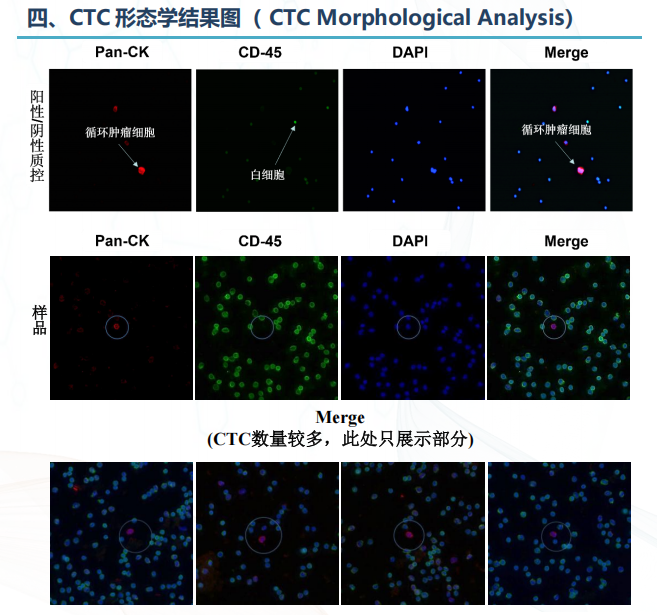
Traditional cancer detection methods, while useful for early cancer screening, have certain limitations. In contrast, our CTC detection technology captures circulating tumor cells (CTC) in the blood, enabling a more comprehensive and precise assessment of cancer progression. Even when early screening shows no abnormalities, CTC testing can sensitively detect the faintest traces of cancer cells, buying patients invaluable treatment time.
In mid-to-late May, Ms. W successfully underwent surgery, and the doctor announced that the procedure was highly successful, bringing a sigh of relief to everyone. However, the battle against cancer was far from over, as the risk of recurrence remained a constant threat looming over the patient.
A New Battlefield in Postoperative Monitoring: 28 CTCs!
In early June, Ms. W sent another blood sample to our company for CTC testing. The results showed that the number of CTCs had dropped to 28, a significant decrease compared to the pre-surgery level.
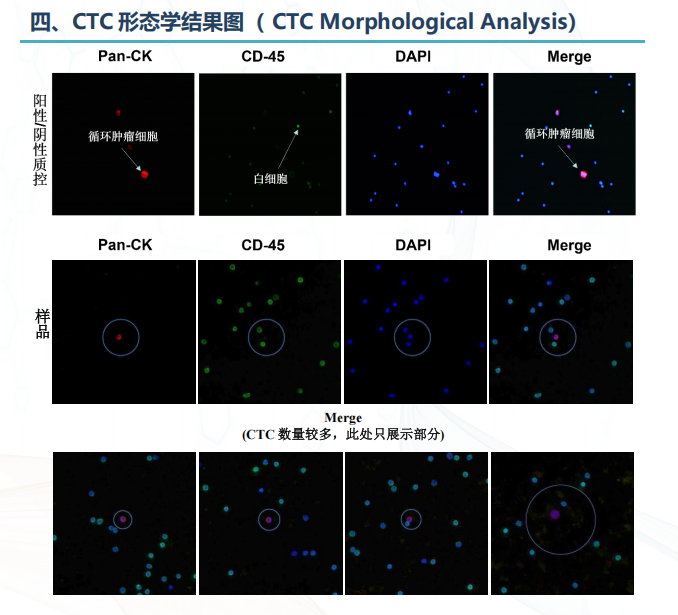
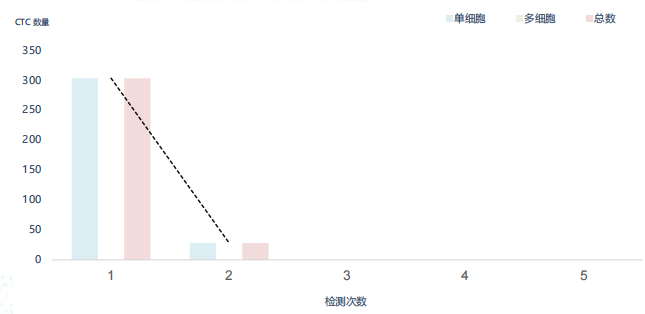
Our professional team analyzed the test results and determined that the value fell within the normal range. They recommended that Ms. W undergo another test a month later to dynamically monitor changes in CTC levels, allowing for timely tracking of disease progression. This ongoing monitoring process lies at the core of MRD (minimal residual disease) detection—by tracking fluctuations in CTC counts, we can accurately assess whether residual cancer cells or signs of recurrence are present, providing a scientific basis for subsequent treatment and recovery plans. Ms. W and her family gladly accepted our recommendation. Compared to the anxious uncertainty of post-surgery waiting, this data-driven monitoring offered them greater peace of mind.
From Technical Recognition to Industry Collaboration: A New Paradigm in Health Management
After witnessing the entire diagnostic and treatment process, the health consulting company expressed strong confidence in our technology and immediately initiated collaboration procedures. They expedited the integration of CTC testing into their consulting workflow, consultant training, and client notification system to ensure this precise detection technology is included in their premium health management service packages.
A Strategic "Scout" in the Battle Against Cancer
In this fight against cancer, our CTC detection technology acts like a precise "scout," providing critical disease insights at every key stage—from early screening to postoperative MRD monitoring. Moving forward, we will continue to refine and enhance CTC detection technology, striving for even greater accuracy and reliability in test results. Our goal is to offer comprehensive health protection—from "early screening and warning" to "recovery management"—to more cancer patients, empowering them to navigate their anti-cancer journey with greater confidence and resilience.