
In today's increasingly awakened awareness of health, regular physical examinations have become a "mandatory course" for many people to protect their lives. Ms. W, who is 41 years old, is a typical representative among them. She has maintained the habit of regular health consultations for many years.
Learn More >_DjNJExIF.png)
Drug sensitivity testing was performed on tumor cells derived from two patients with ovarian malignant germ cell tumors: Case NO.009 (treatment-naïve) and Case NO.015 (relapsed case). The results demonstrated that:
Learn More >
This study conducted 3D culture on circulating tumor cell (CTC)-derived cell lines from three pancreatic cancer patients. All cell lines successfully formed spheroid aggregates within 14 days. H&E staining revealed that these spheroids exhibited patient-specific morphological characteristics, consistent with clinical pancreatic cancer tissue histology. Immunophenotyping confirmed their epithelial origin as CK+/CD45-/DAPI+ tumor cells.
Learn More >_JZ3xvaIp.png)
CTC Count Dynamics Correlate with Therapeutic Response
Learn More > (3)_Pg3KbvSN.png)
A Stage II cervical cancer patient provided preoperative peripheral blood samples. The Labyrinth microfluidic platform successfully isolated 303 circulating tumor cells (CTCs), demonstrating:
Learn More >
The AJCC 8th Edition Breast Cancer Staging System specifies that the presence of ≥1 CTC per 7.5 mL in early-stage breast cancer patients indicates a poor prognosis. Domestic research teams have further validated that baseline and post-treatment CTC levels can predict outcomes in advanced breast cancer patients.
Learn More >
Circulating Tumor Cells (CTCs) can be used as an auxiliary tool for clinical tumor prognosis assessment and hold certain reference value in efficacy monitoring, drug resistance evaluation, and treatment guidance
Learn More >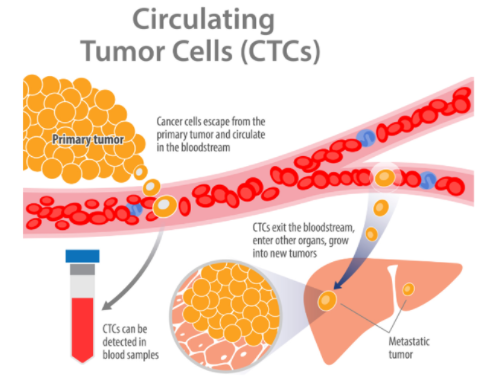
CTC technology, recognized as one of the most promising liquid biopsy approaches, has garnered worldwide expert consensus and guideline endorsements, supported by over 20,000 research publications and established clinical applications across major cancer types.
Learn More >